marokko-travel.comMorocco Specialist
The grand showcase including the Blue City of Chefchaouen, imperial heritage sites, golden desert dunes, canyons, and Essaouira beach.
This premium 14-day private itinerary "14-Day Grand Tangier to Marrakech Imperial Tour" starts directly in TANGIER and takes you on a deep journey into the true magic of Morocco. Traveling in comfort with a private air-conditioned vehicle and your own dedicated, professional driver, you will discover stunning contrasts: from the bustling medieval medinas and ancient handcraft quarters to the dramatic snow-capped peaks of the High Atlas Mountains. The supreme highlight is a spectacular camel trek at sunset into the golden Erg Chebbi dunes of the Sahara, followed by an unforgettable overnight stay in a high-end luxury nomadic camp. Complete with handpicked authentic Riads, guided local historical walks, and absolute flexibility, this tour represents the ultimate customizable Moroccan escape designed around your pace.
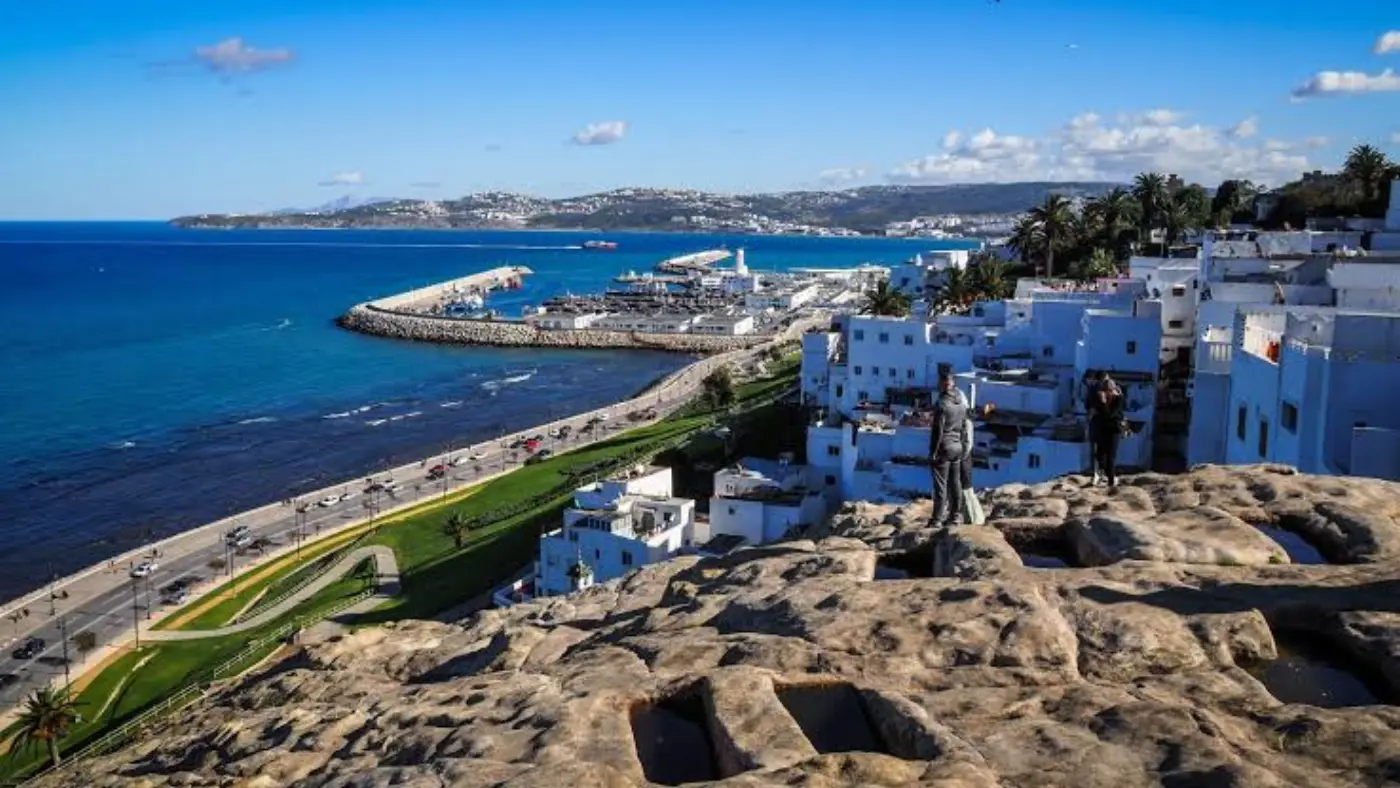
Your fourteen-day grand tour begins the moment you land at Tangier Ibn Battouta Airport, where your private driver waits with a sign bearing your name. Tangier sits at the meeting point of the Mediterranean and Atlantic, and of Africa and Europe — on a clear day, Spain is visible across the Strait of Gibraltar. This strategic position made Tangier a crossroads of civilisations for millennia, and its cosmopolitan, layered atmosphere feels distinct from anywhere else in Morocco. Time and energy permitting, your driver may suggest a stop at the Kasbah, the old fortified quarter with sweeping views over the strait, or the Petit Socco, once frequented by writers including Paul Bowles and William Burroughs. From here you are transferred to your riad to check in and rest. This evening, take a short walk for your welcome glass of Moroccan mint tea and use the relaxed evening to ask any questions about the fourteen days ahead — a genuinely comprehensive showcase of the Blue City of Chefchaouen, Morocco's imperial heritage, golden desert dunes, dramatic canyons, and the Atlantic beaches of Essaouira. Tangier's cosmopolitan atmosphere, shaped by centuries as a crossing point between continents, makes for a genuinely distinctive first impression before the fourteen days ahead take you deep into Morocco's mountains, deserts, and imperial cities.
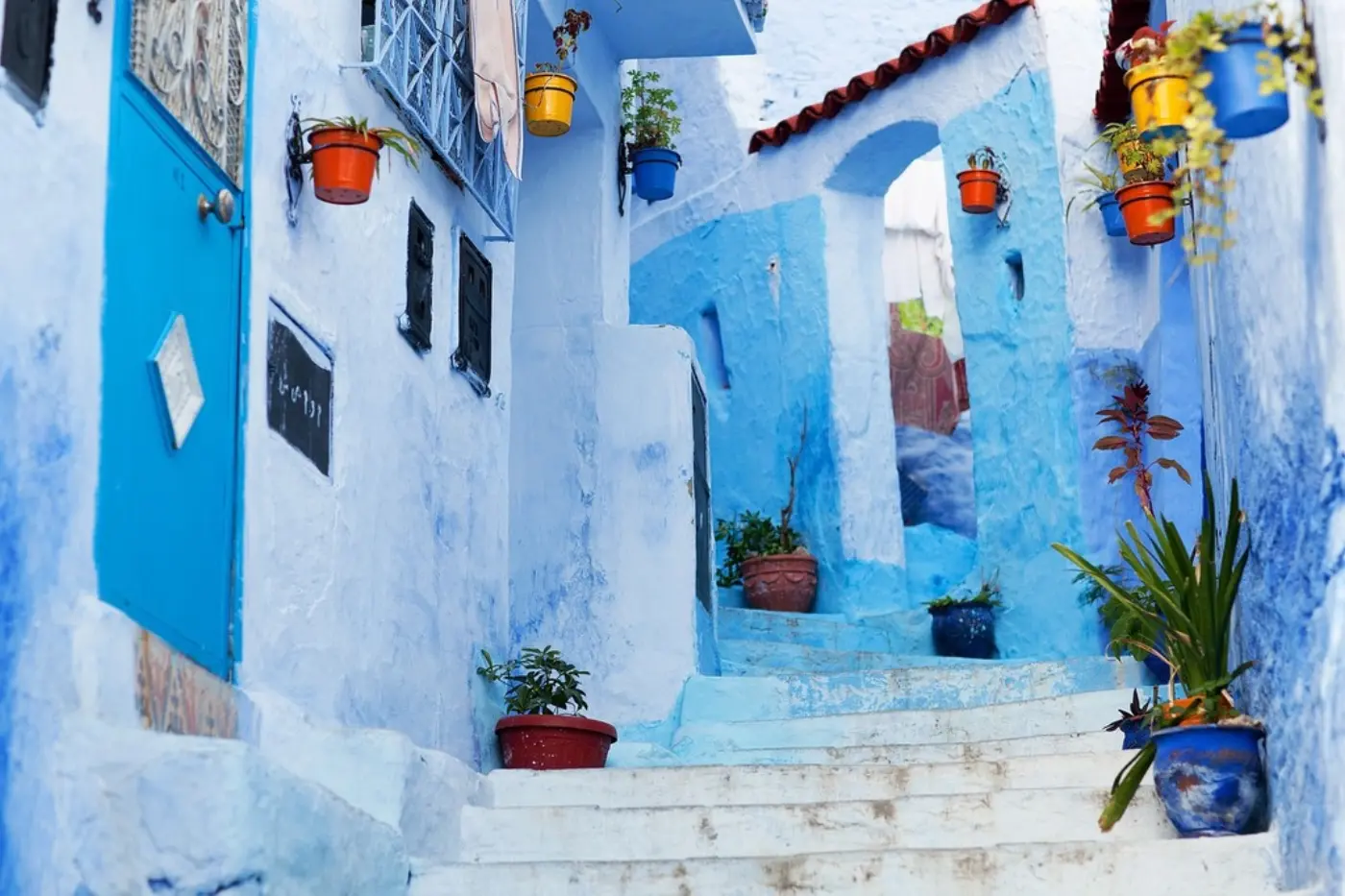
This morning we depart Tangier, heading into the Rif Mountains toward Chefchaouen, the famous 'Blue City', a drive of roughly two and a half hours through increasingly dramatic mountain scenery. Founded in 1471 as a small defensive fortress, Chefchaouen later became a refuge for Muslim and Jewish families fleeing the Spanish Reconquista, explaining its distinctly Andalusian character and famous blue-washed walls. We arrive around midday, with the afternoon free to explore the impossibly photogenic medina at your own pace — Plaza Uta el-Hammam, the 15th-century Kasbah fortress, and the labyrinth of blue stairways and doorways that make the town so beloved by photographers. Enjoy dinner on a rooftop terrace overlooking the Rif Mountains as the light turns golden over the blue walls. This stretch of the Rif is known for its unusually high rainfall compared to the rest of Morocco, giving the hillsides a green, terraced character quite different from the arid landscapes awaiting later in the trip. The blue colour scheme itself has several competing explanations among historians and residents alike — some point to a Jewish tradition, brought by refugees who settled here in the 1930s, in which blue represents the sky and serves as a reminder of God's presence; others suggest a more practical origin in blue's natural mosquito-repellent properties, or simply a local aesthetic preference that became a defining civic identity over the decades. Whatever its true origin, the effect today is unmistakable, and the deeper you wander from the main square, the more the colour seems to shift and deepen with the light.
This morning is dedicated to Chefchaouen, with no early departure — this remarkable town rewards unhurried time. Your guide leads you through the upper medina before free time to wander the blue alleyways independently, a good chance to pick up handwoven wool garments or local goat's cheese. Around midday, we head south toward Meknes, one of Morocco's four Imperial Cities, envisioned on a grand scale by Sultan Moulay Ismail in the late 17th century as Morocco's answer to Versailles, with vast royal granaries and stables built for 12,000 horses. We arrive in the late afternoon for a visit to Bab Mansour, widely considered the most beautiful gate in North Africa, before checking in for the night in Meknes's considerably quieter, UNESCO-listed medina. Lunch is typically enjoyed independently in Chefchaouen's medina before we depart for Meknes, giving one last taste of the Rif Mountain atmosphere. Meknes today is a considerably quieter, less internationally famous city than Fes or Marrakech, despite having briefly been the imperial capital of the entire kingdom, and this relative obscurity is very much part of its appeal — you'll find far fewer tour groups and hawkers than in the busier medinas further south, and the pace of daily life feels noticeably more local.
This morning we drive around thirty minutes to Volubilis, the best-preserved Roman ruins in Morocco and a UNESCO World Heritage Site, once the thriving administrative capital of Roman Mauretania Tingitana. With your guide, we explore the Basilica, the Capitol, a triumphal arch honouring Emperor Caracalla, and a remarkable collection of intact mosaic floors preserved almost two thousand years thanks to Morocco's dry climate. A short drive brings us to Moulay Idriss Zerhoun, Morocco's holiest town, named for the great-grandson of the Prophet Muhammad who founded Morocco's first Islamic dynasty here in the 8th century. In the early afternoon, we continue to Fes, arriving with time to check in and take an easy orientation walk before tomorrow's deeper exploration. Lunch is usually taken in Fes shortly after arrival, an easy introduction to the refined Fassi cuisine the city is celebrated for. Volubilis was continuously inhabited from the 3rd century BC through to the 11th century AD, making it one of the longest continuously settled Roman-era sites in North Africa, and the mosaics still visible on-site depict scenes from Greek mythology, including the labours of Hercules and the abduction of Europa, remarkably vivid after nearly two millennia exposed to the elements.
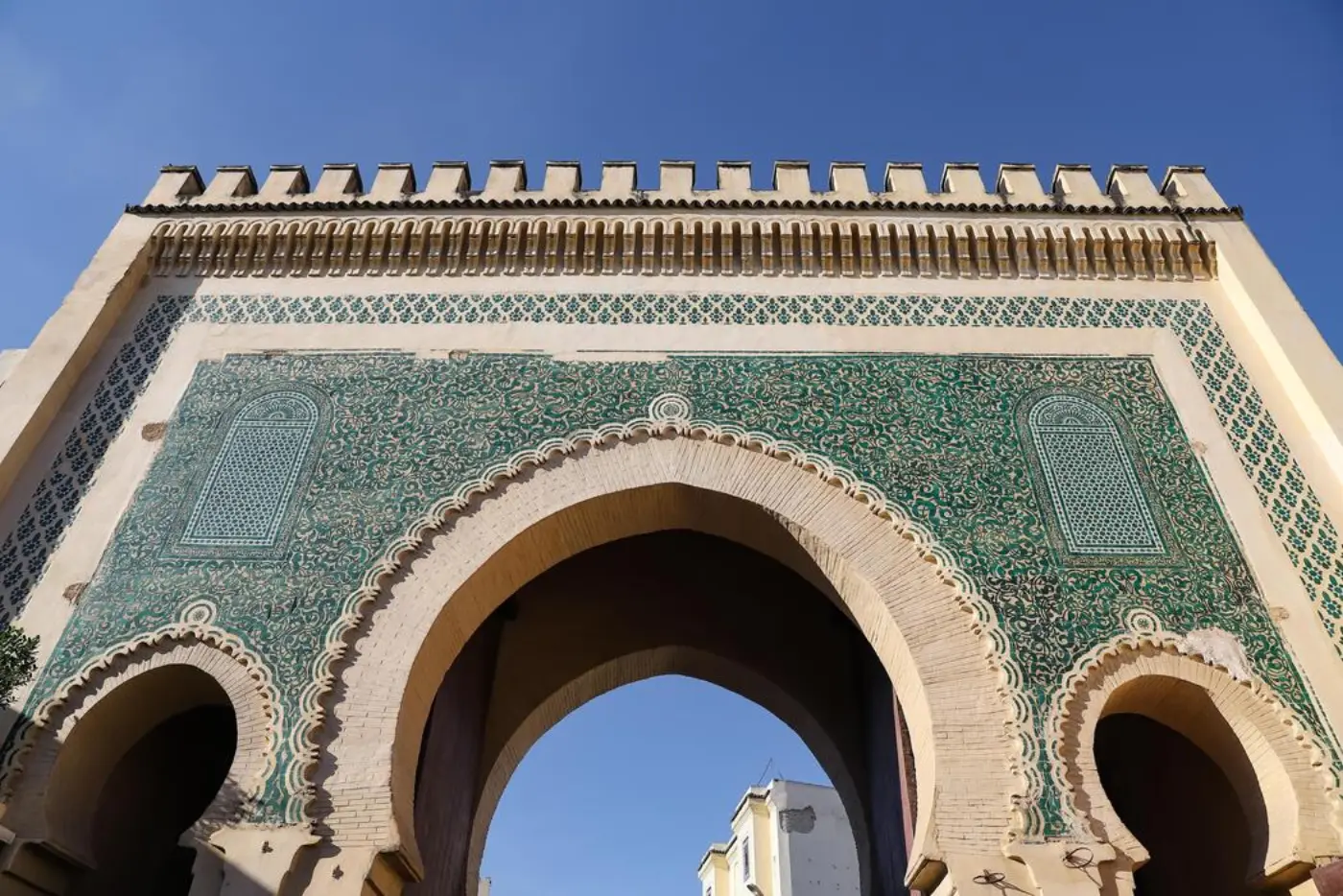
Today is dedicated entirely to Fes, with an early start around 9am before the midday heat and crowds build. A licensed local guide leads you through Fes el-Bali, a UNESCO World Heritage Site since 1981, beginning at Bab Boujloud, the ornate blue-and-green tiled 'Blue Gate'. We visit the Chouara Tannery, one of the oldest in the world, where hides are still dyed by hand in stone vats using methods essentially unchanged since the 11th century, view the exterior of the Al-Qarawiyyin Mosque and University, founded in 859 AD and recognised as the oldest continuously operating educational institution in the world, and visit the Bou Inania Madrasa, celebrated for its intricate cedar carving. Lunch is at a traditional Fassi restaurant, with the afternoon free to browse the souks. Lunch today is at a traditional Fassi restaurant near the souks, a welcome midday pause in the middle of the guided medina tour. Fes el-Bali's sheer density is genuinely difficult to grasp until you're standing inside it — over 9,000 streets and alleys packed into a walled area of roughly 280 hectares, none of them wide enough for a car, which is precisely why donkeys and handcarts remain the primary means of transporting goods through the medina to this day.
Early departure this morning for one of the longest and most spectacular driving days of the trip, climbing into the Middle Atlas via Ifrane, an alpine-style town built by the French in the 1930s, and the Azrou Cedar Forest, home to wild Barbary macaques. Continuing south past Midelt for lunch, the road follows the Ziz Gorges and then the Ziz Valley, a ribbon of palm groves and mudbrick ksour villages. As the afternoon light softens, we arrive in Merzouga, where camel handlers meet us for a sunset trek across the dunes to our exclusive desert camp. After a traditional dinner cooked over an open fire, gather around the campfire as Berber musicians play traditional drums under one of the most spectacular starscapes anywhere on Earth. Lunch is typically a simple roadside stop near Midelt, giving a proper break midway through this long but spectacular mountain-to-desert crossing. The leatherworking tradition on display at the Chouara Tannery dates back to the medieval period, when Fes was a major hub on trans-Saharan trade routes, and the same three-stage process — soaking hides in a mixture including pigeon droppings to soften them, then dyeing in the iconic honeycomb of stone vats using natural dyes like poppy for red, indigo for blue, and henna for orange — remains essentially unchanged today, one of the most visually striking sights in the entire country.
For early risers, this morning offers the chance to climb a nearby dune before dawn and watch the sunrise transform the desert from soft pink to deep gold. After a simple Berber breakfast, we drive west toward Todra Gorge, where sheer pink and orange limestone cliffs rise up to 300 metres, stopping for a walk along the canyon floor. In the afternoon, we continue along the Road of a Thousand Kasbahs toward the Dades Valley, also known as the Valley of Roses, checking in to a kasbah-style hotel with terrace views over the dramatic rock formations for a relaxed dinner as the sun sets. Lunch is usually enjoyed on a terrace overlooking the palm oasis near Todra Gorge, a shaded, welcome stop after the morning's sunrise excursion. The cedar forests of the Middle Atlas once covered a far larger area than they do today, and ongoing conservation efforts aim to protect the remaining old-growth stands, some of which predate the founding of Fes itself by several centuries — a sobering thought as you walk beneath trees that have witnessed the entire span of Moroccan imperial history.
After breakfast, we head to Ouarzazate, the 'Hollywood of Africa' thanks to the Atlas Film Studios, visiting the Taourirt Kasbah before continuing to Ait Ben Haddou, a UNESCO-listed fortified ksar and one of the best-preserved examples of pre-Saharan earthen architecture in the world. We walk through the ksar's narrow lanes to the old communal granary for panoramic views. After lunch, our driver begins the spectacular ascent of the Tizi n'Tichka Pass, the highest major mountain pass in North Africa, with sweeping High Atlas views. We arrive in Marrakech in the late afternoon and check in to your riad. Lunch is typically taken with sweeping views over the Ait Ben Haddou valley, a memorable midday stop on this long but rewarding driving day. The Todra Gorge's sheer walls were carved by the Todra River over millions of years, cutting through what was once a solid limestone plateau, and the canyon remains an important water source for the palm oasis and villages downstream, even as its dramatic cliffs have made it one of the most popular rock-climbing destinations in North Africa.
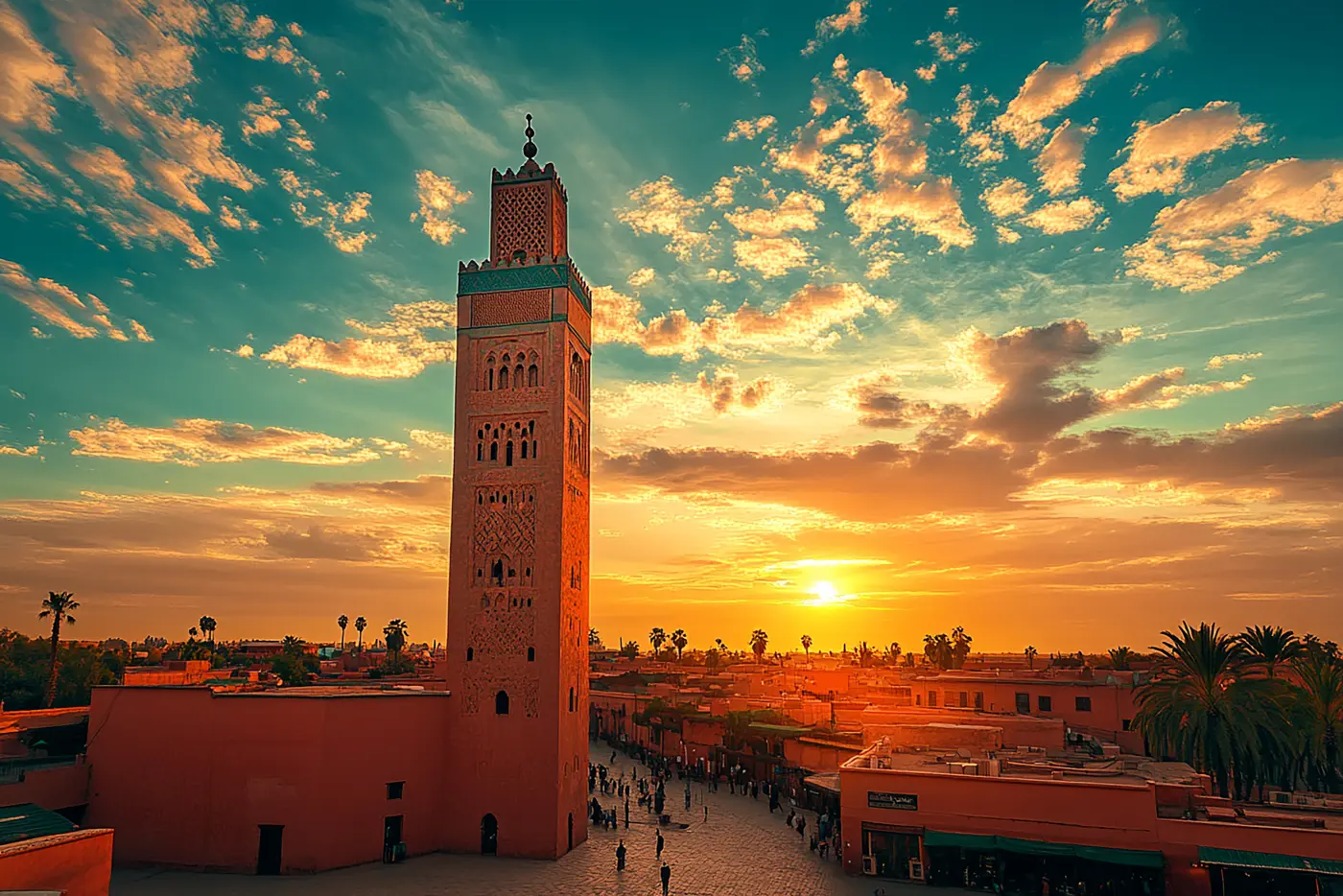
This morning a local guide leads you through the 'Red City', beginning at the Bahia Palace, followed by the Saadian Tombs, renowned for their Italian Carrara marble and gold-leaf detailing. We view the Koutoubia Mosque from its gardens, and around midday visit the Jardin Majorelle, the cobalt-blue botanical garden created by Jacques Majorelle and later restored by Yves Saint Laurent. In the afternoon, we head into the souks, where your guide helps with the art of bargaining, before an evening at Jemaa el-Fna square, which transforms after sunset with food stalls, storytellers, and musicians. Lunch during the guided Marrakech tour is usually at a traditional restaurant near the souks, a good pause before the afternoon's continued exploration. Ait Ben Haddou's continued habitation is itself remarkable — a handful of families still live within the ksar's walls today, maintaining a living connection to a building style that UNESCO recognised specifically because so few other examples have survived intact, most having crumbled back into the earth from which they were built over the centuries.
Today we swap the intensity of Marrakech for the Atlantic coast, driving roughly two and a half hours west to Essaouira, a UNESCO World Heritage-listed fortified port town built in the 18th century. We walk along the Skala de la Ville, the historic sea-facing ramparts lined with bronze cannons, before wandering through the medina's relaxed, art-filled streets and the bustling fishing port, where blue wooden boats unload the day's catch beside grilled-fish stalls, an excellent informal lunch option. Essaouira has long been known as 'Wind City' for the reliable Atlantic breeze that has made it a major windsurfing destination since the 1980s. We drive back to Marrakech in the late afternoon. The fresh grilled fish stalls right on Essaouira's quayside make for an excellent, informal lunch, watching the day's catch being unloaded just metres away. Marrakech's souks are traditionally organised by craft guild, a system dating back centuries, meaning you'll pass through distinct zones for dyers, metalworkers, carpenters, and leatherworkers in turn, each filling the air with its own distinctive sounds and smells — the rhythmic hammering of the coppersmiths' quarter is particularly memorable, audible from several streets away.
Today offers an optional excursion to the Ouzoud Waterfalls, roughly two and a half hours northeast of Marrakech, Morocco's most impressive waterfalls, where the Oued El-Abid river plunges around 110 metres over red rock cliffs into pools below. We take a walking path down through olive groves to the base of the falls, where troops of wild Barbary macaques are frequently seen along the trail. Optional boat rides on the pools, and a swim if you wish, are popular ways to enjoy the surroundings, with lunch at a terrace restaurant overlooking the falls. If you prefer a quieter day, this is equally a good opportunity to simply relax at your riad. Lunch at the terrace restaurants overlooking Ouzoud's falls is a genuine highlight of the day, with few dining settings in Morocco matching the view. Essaouira's name means 'the well-designed' in Arabic, a fitting description for a town whose grid-like medina layout, unusual for Morocco, was deliberately planned by French military architect Théodore Cornut in the 18th century, commissioned by Sultan Mohammed III to create a fortified port capable of handling international trade with Europe.
Today offers a more relaxed, in-depth exploration of Marrakech beyond yesterday's headline sights. We recommend a visit to the Ben Youssef Madrasa, once North Africa's largest Islamic college, famed for its exceptionally detailed carved stucco and zellige tilework, followed by unhurried time in the souks — now with a good feel for prices and quality, an excellent opportunity for carpets, leather goods, or ceramics. The afternoon is free to wander the quieter residential quarters of the medina, away from the main tourist routes, where daily Moroccan life continues much as it has for centuries. This more relaxed day is a good opportunity to revisit the Jardin Majorelle or a favourite corner of the souks at a gentler, unhurried pace than the group tour allowed. The Ouzoud Waterfalls take their name from the Berber word for olives, a reference to the terraced olive groves that line the walking path down to the base of the falls, many of which are centuries old and still actively harvested by local families each autumn.
After twelve days of travel, today is intentionally left completely free. Many guests choose complete rest — a traditional hammam and argan oil massage at a spa within their riad, an experience deeply rooted in Moroccan culture involving steam, a rigorous black-soap scrub, and a relaxing massage. Others prefer a final, unhurried wander through the medina or a leisurely breakfast and afternoon at their riad. Your driver and riad host remain available throughout the day for any questions, and we suggest closing out your Moroccan journey with a memorable final dinner, perhaps at a rooftop restaurant with views over the Koutoubia minaret as the sun sets over the Atlas Mountains one last time. Whatever you choose today, your driver and riad host remain available for any questions or last-minute arrangements ahead of tomorrow's departure. The Ben Youssef Madrasa, founded in the 14th century and rebuilt in its current form in the 16th, could accommodate several hundred students at its peak, each housed in tiny individual cells arranged around the building's several courtyards — a striking contrast between the austere living quarters and the extraordinarily ornate carved stucco and cedar woodwork covering nearly every surface of the communal spaces.
Our journey together comes to an end this morning. Depending on your flight time, enjoy a final breakfast on your riad's rooftop terrace and take a last walk through the medina. If time allows, your driver can suggest a final stop at the Menara Gardens, a peaceful 12th-century olive grove with the snow-capped High Atlas as a backdrop. At the appropriate time, your private driver collects you and your luggage and transfers you directly to Marrakech Menara Airport. Over these fourteen days, you will have travelled from the Mediterranean-Atlantic crossroads of Tangier, through the Blue City of Chefchaouen, the imperial grandeur of Meknes and Fes, the golden dunes of the Sahara, the dramatic canyons of Todra and Dades, over the High Atlas, and finally to the beaches of Essaouira and the vibrant energy of Marrakech — a genuinely grand tour of Morocco's astonishing diversity. On behalf of your driver, guides, and the entire Marokko Travel team, thank you for travelling with us on this genuinely grand tour of Morocco's extraordinary diversity.
Free cancellation up to 15 days before the tour starts.
Please select your preferred start date above.
Enter your name, email, and pick a date above to continue to payment.
Helpful external guidelines and official links to assist in your travel preparation.
Scenic overland route covering 14 days with full transport safety and picturesque mountain drives. Guaranteed stops for photography and rest breaks.
"An absolute highlight of our trip to Morocco! The private driver was exceptionally professional, telling us historical stories as we crossed the High Atlas. The desert camp was beyond luxurious, clean with warm water and exquisite food. Highly recommend Marokko Travel!"
United Kingdom • June 2026
"Perfect execution from start to finish. Our family customized this itinerary to spend an extra night in Chefchaouen. Accommodation was amazing, genuine Riads with great hospitality. Communication on WhatsApp was super quick!"
Sweden • May 2026
"Unbelievable private tour. Ait Ben Haddou and Erg Chebbi desert felt like another world. Everything was taken care of: luxury transport, excellent local guides in Fes, and magical dinners. Worth every single cent."
Netherlands • April 2026